Most people ask about price, delivery and permits first. The hydro bill usually comes up somewhere near the end of the conversation, almost as an afterthought.
Then it arrives, and it turns out to be the part people tell their friends about.
A real bill from a real owner
One of our container home owners shared their first hydro bill with us earlier this year. Two months of power came to $37.35, and that was with a washer and dryer, a dishwasher, electric heat and an air filtration system all running.
Hydro bill for my new tiny container home is $37.35 for the first two months.
For context, someone replying to that post mentioned paying several hundred dollars for the same period in a conventional suite with no washer, no dryer and no dishwasher, while being careful about lights and heat.
Individual bills obviously vary. But the gap is not an accident, and it comes down to three fairly simple things.
One: there is just less space to heat
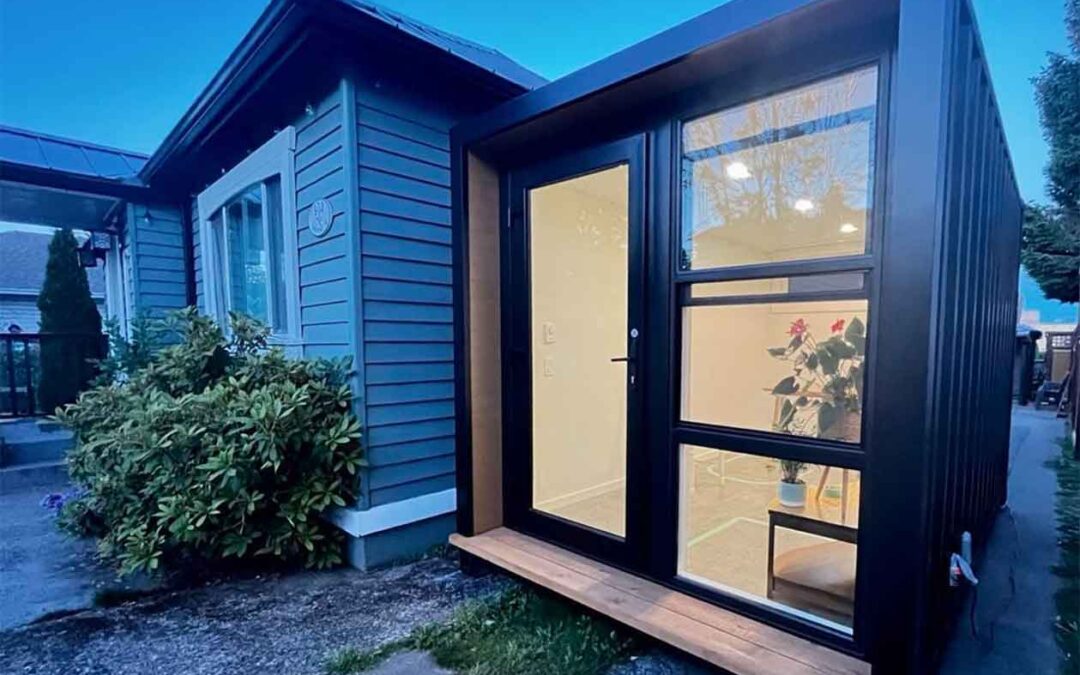
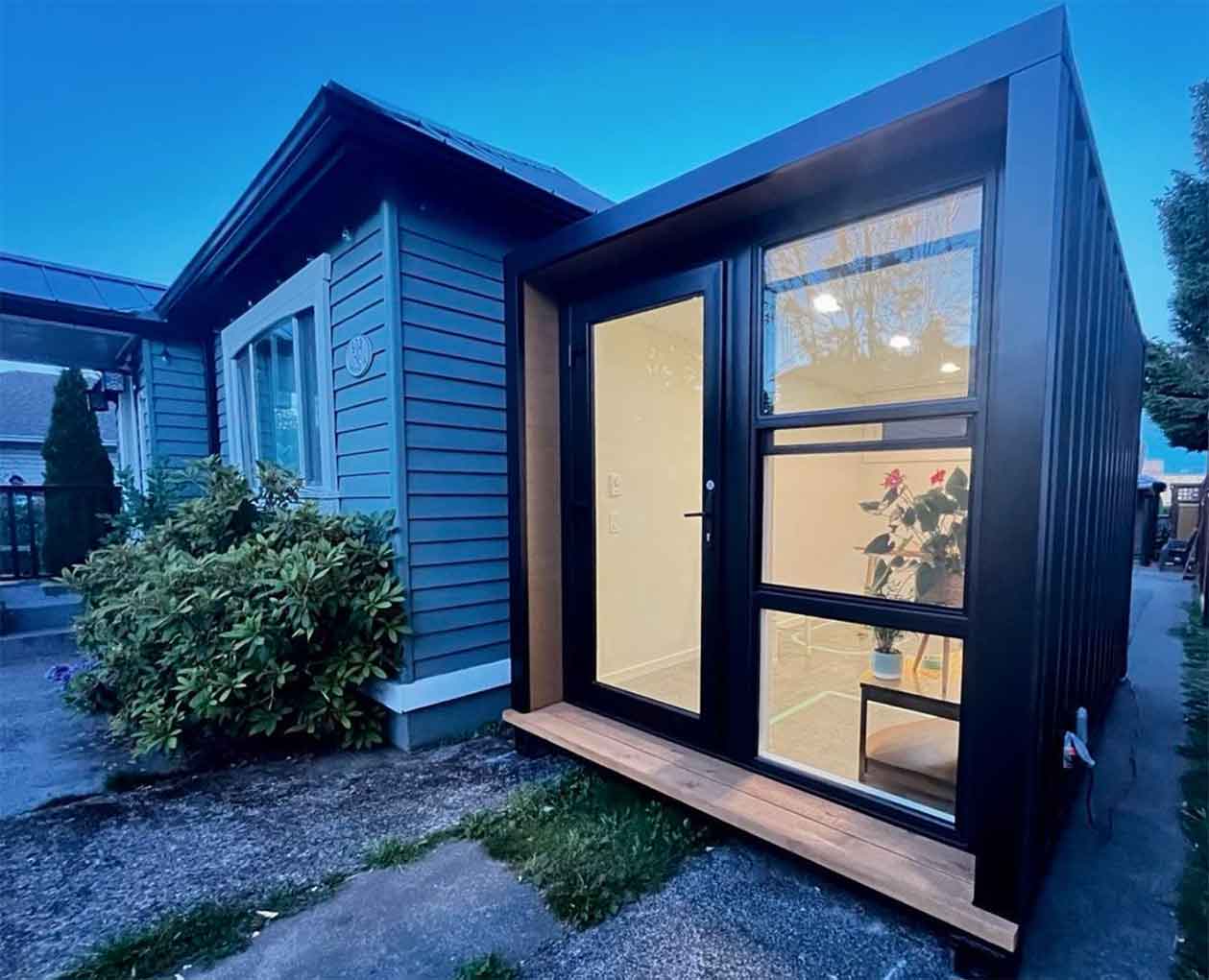
Our modular pods are compact. A conventional home office in a converted basement or garage is usually part of a much larger heated volume, and you end up paying to condition space you are not using.
Small footprints are cheap to run for the same reason a kettle boils faster than a stockpot. Less air, less surface area, less energy to bring it to a comfortable temperature and hold it there.
Two: a continuous, sealed envelope
Insulation only performs as well as its weakest point. In older homes, the losses happen at the gaps: rim joists, attic hatches, corners where two materials meet, and the floor above a cold crawlspace.
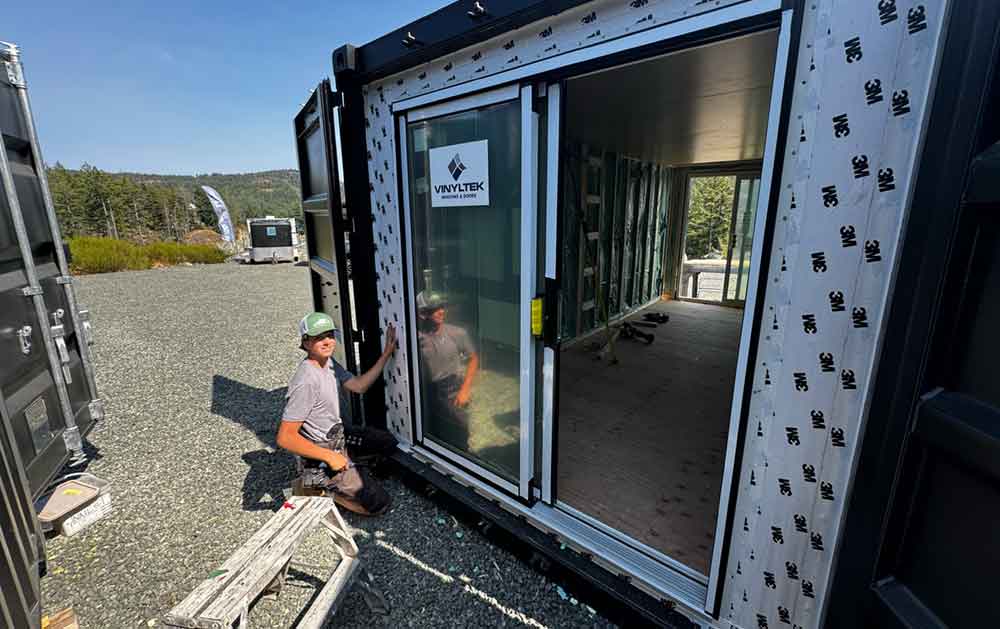
Our pods are built with continuous spray foam insulation to a maximum of R22, with a fully sealed and insulated floor system. Because they are built in one piece under cover rather than assembled on site in the rain, the envelope stays continuous. There is no draughty corner that somebody meant to come back and seal.
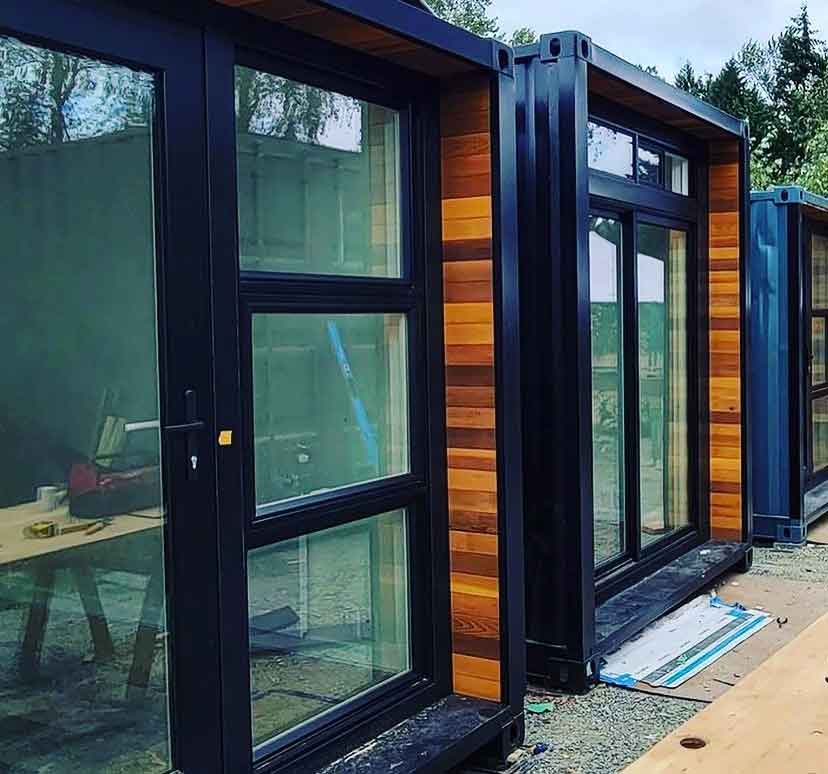
Steel is a strong outer shell for this. Once the interior is spray foamed, wired and drywalled, you get a tight, stable box that holds its temperature well through a coastal winter.
Three: it plugs into a standard household outlet
Our pods are wired for a standard 110V household plug-in. No gas line, no new service, no separate meter.
That matters for efficiency in a practical way. The pod runs on electric heat and lighting sized for a small, well-insulated space, so the load stays modest. It also means the running cost is easy to understand before you commit, rather than a surprise in February.
Efficiency you can actually feel
On this coast, energy performance is not only about dollars. A sealed, well-insulated space is also a drier and more comfortable one.
Damp is the real enemy in a Vancouver Island winter, and it is exactly what sinks the uninsulated shed conversion. A properly insulated envelope with good air management keeps moisture under control, which protects your equipment, your paperwork and your interest in actually going out there in January.
The sustainability side
There is a second kind of efficiency worth mentioning. Every pod starts as an upcycled shipping container, so the structure already exists rather than being manufactured from scratch. There is no foundation poured, no excavation, and very little disruption to the ground it sits on.
And because pods are relocatable, they do not become demolition waste when circumstances change. The unit moves and keeps working.
What will actually affect your own numbers
We would rather set honest expectations than quote one bill and leave it there. Your running costs will depend on:
- Which model you have, and its size
- How many hours a day you are using the space
- What you plug in, since heaters and appliances dominate the bill
- How you set the thermostat between sessions
- Current BC Hydro rates
What we can say with confidence is that a small, continuously insulated, purpose-built space is a far more efficient thing to heat than an extra room bolted onto a house, or a garage that was never meant to be lived in.
If you want to talk through the specifics for your situation, we are happy to walk you through what our pods actually draw. You can explore our rental options, browse pods available to purchase, or email info@westcoastcontainerhomes.ca or leave us a message at (250) 704-4422.
Planning something bigger? West Coast Container Homes also works on commercial and multi-unit modular projects, helping businesses, developers and organizations create flexible space for offices, staff accommodation, rental units, hospitality and custom applications. Reach out at info@westcoastcontainerhomes.ca to discuss your commercial or custom project with us!